|
|
| Day 7: December 28,
2005 - Puerto Madryn, Argentina |
|
|
| |
We were picked up by
our guide at 8:30am and headed out of town to
the Valdes Peninsula. Along the way, we passed
the aluminum plant that produces millions of tons
of ingots from dust that is shipped in from Brazil.
The plant accounts for 1000 jobs and 40% of the
related services for this town of 60,000 people.
As we got further out of town we were able to
see the Patagonian steppe. It is a harsh landscape
of rocky soil, low scrub brush and spiky tufts
of grass. The name of the region comes from the
Spanish settler's reaction to the local indians
and translated to land of the giants because the
size difference between the Spanish and the natives.
Along the way we discussed the local fauna and animals
- guanacos, sheep, matirs (kind of like a hare)
and others. After a long drive over gravel roads
we reached Puerto Delgado were we had a nice lunch
and spent time on the beach checking out the elephant
seals. They were mostly juvenile males in the process
of molting. They make a lot of noise but were neat
to see. We were able to get within 200 feet of them
and really get a good look.
|
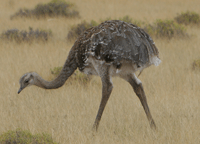
Rhea |
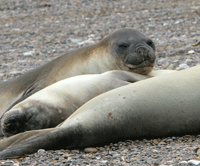
Elephant Seal |
| |
From there we turned back toward Puerto Madryn
and stopped at the sea lion colony outside of
Puerto Pyramids. It was so windy that we all had
a hard time walking forward. The sea lions were
in small family packs or alone on the beach. We
could not get as close, but it was still an excellent
vantage point to observe them. There were also
scores of sea gulls and cormorants flying around.
|
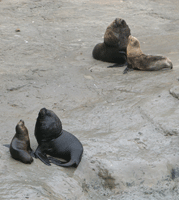
Sea Lions |
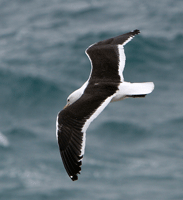
Flying gull |
| |
On the way back we discussed many topics about the
area.
The province of Chubut
is one of 25 regional governments of which the
southernmost 5 make up Patagonia.
Elephant seals are the
species with the largest differential between
the males (6-7 meters) and females (2-3 meters)
in both length and overall weight.
The female elephant seal
reaches maturity at 4 years while it takes the
male 7 years to mature.
The sea lion got it's
name from the large bands of fat around it's neck
that resemble a mane. |
|
| |
|
|
|
|